The Future of AI in Business: How Artificial Intelligence is Transforming Every Industry in 2026
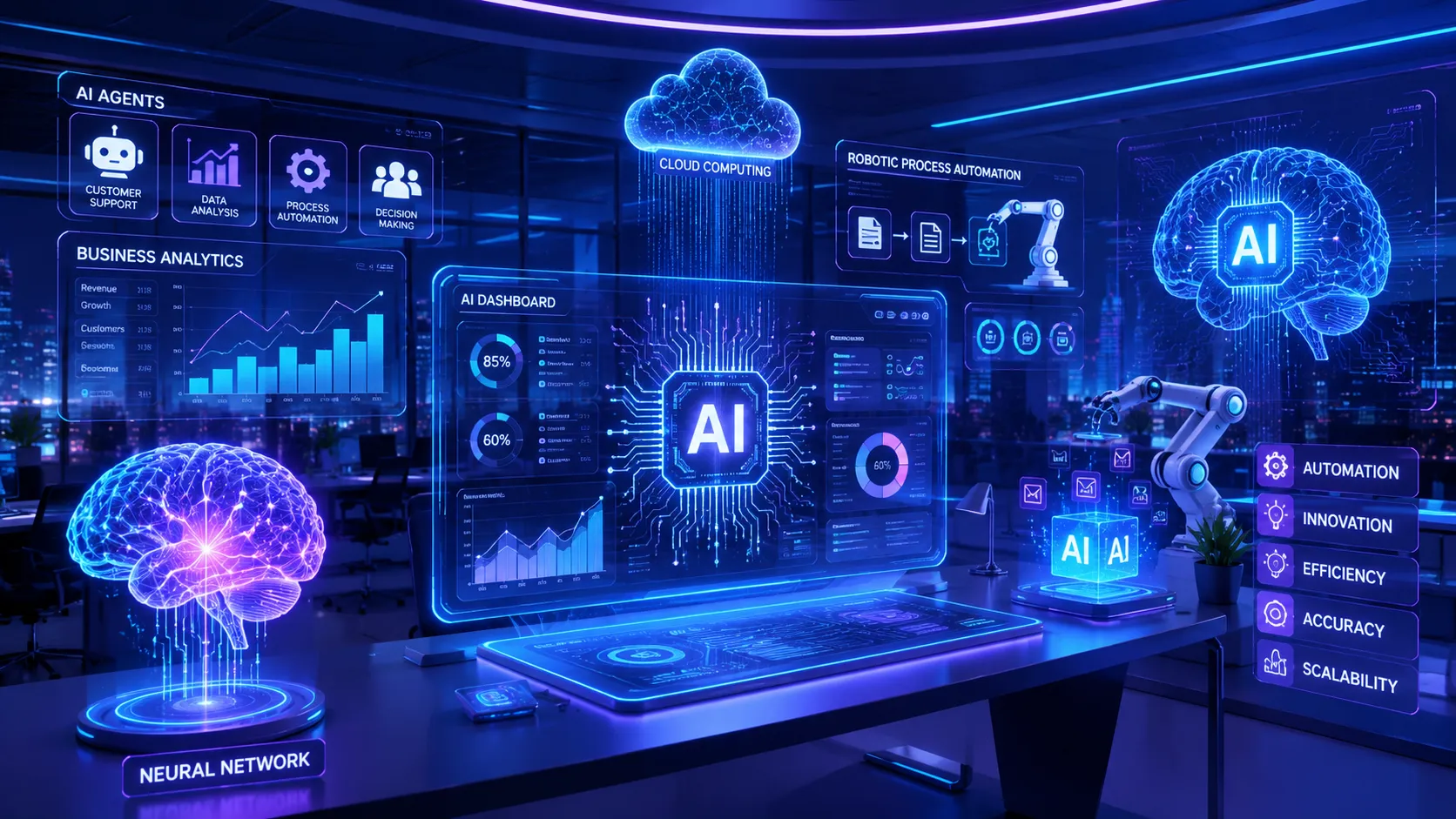
Introduction
Artificial Intelligence (AI) has evolved from an emerging technology into a core driver of business innovation. Organizations across industries are using AI to automate processes, improve customer experiences, uncover valuable insights from data, and accelerate decision-making. Whether you're a startup looking to streamline operations or a global enterprise seeking competitive advantages, AI has become an essential part of modern business strategy.
In 2026, AI is no longer just about chatbots or automation—it powers intelligent agents, predictive analytics, personalized recommendations, and advanced decision support systems that help businesses operate more efficiently than ever before.
What is Artificial Intelligence?
Artificial Intelligence refers to computer systems that can perform tasks traditionally requiring human intelligence. These tasks include learning from data, understanding language, recognizing images, making predictions, solving problems, and generating content.
Modern AI technologies include:
Generative AI
Machine Learning
Deep Learning
Natural Language Processing (NLP)
Computer Vision
Speech Recognition
Predictive Analytics
AI Agents
Together, these technologies enable organizations to automate complex workflows and create more intelligent digital experiences.
Why AI Matters for Businesses
Businesses are embracing AI because it delivers measurable value across every department.
Key Benefits
Automates repetitive and time-consuming tasks
Reduces operational costs
Improves employee productivity
Enhances customer experiences
Enables faster, data-driven decisions
Increases operational efficiency
Identifies business opportunities
Improves accuracy while reducing human error
Organizations that integrate AI effectively gain a significant competitive advantage in today's rapidly evolving marketplace.
AI Applications Across Industries
Healthcare
AI assists healthcare providers by:
Supporting medical diagnosis
Analyzing medical images
Predicting patient risks
Automating administrative tasks
Improving treatment planning
Retail & E-commerce
Retailers use AI to:
Recommend personalized products
Optimize pricing strategies
Forecast demand
Manage inventory
Deliver intelligent customer support
Banking & Finance
Financial institutions leverage AI for:
Fraud detection
Credit risk assessment
Customer service automation
Investment analysis
Regulatory compliance
Manufacturing
Manufacturers use AI to:
Predict equipment failures
Improve quality control
Optimize production schedules
Reduce downtime
Enhance supply chain visibility
Education
Educational institutions benefit from AI through:
Personalized learning experiences
Intelligent tutoring systems
Automated grading
Student performance analytics
Virtual learning assistants
The Rise of AI Agents
One of the biggest developments in AI is the emergence of AI agents—intelligent systems capable of understanding goals, making decisions, and executing tasks with minimal human intervention.
AI agents can:
Schedule meetings
Manage customer support
Analyze documents
Generate reports
Monitor business operations
Coordinate workflows
Assist software development
Support sales and marketing teams
As AI agents continue to evolve, they are becoming valuable digital collaborators for businesses.
AI-Powered Customer Experience
Customer expectations continue to rise, and AI helps businesses deliver faster, smarter, and more personalized interactions.
Examples include:
Intelligent virtual assistants
Personalized product recommendations
Real-time language translation
Sentiment analysis
Automated support ticket routing
24/7 customer service
These capabilities improve customer satisfaction while reducing support costs.
AI and Data-Driven Decision Making
Data is one of the most valuable assets for any organization. AI enables businesses to transform raw data into actionable insights.
AI-powered analytics can:
Predict customer behavior
Identify market trends
Forecast sales
Detect anomalies
Optimize business processes
Support strategic planning
By making better use of data, organizations can respond more quickly to changing market conditions.
Responsible AI and Ethical Considerations
As AI adoption grows, businesses must ensure that AI systems are used responsibly.
Key principles include:
Transparency
Fairness
Data privacy
Security
Human oversight
Bias mitigation
Regulatory compliance
Responsible AI builds trust with customers, employees, and stakeholders while reducing potential risks.
Best Practices for AI Adoption
Organizations planning to implement AI should:
Define clear business objectives
Identify high-impact use cases
Ensure data quality
Invest in employee training
Start with pilot projects
Monitor AI performance continuously
Strengthen cybersecurity measures
Maintain human oversight where necessary
A phased approach helps maximize value while minimizing implementation risks.
Emerging AI Trends in 2026
Several trends are shaping the future of AI:
Autonomous AI agents
Multimodal AI systems
AI-powered software development
Intelligent business automation
Edge AI for IoT devices
AI-assisted cybersecurity
Hyper-personalization
Responsible and explainable AI
AI-driven digital transformation
Collaborative human-AI workflows
These innovations are redefining how businesses operate and compete.
Challenges of AI Implementation
While AI offers significant benefits, organizations should be prepared to address challenges such as:
Data quality issues
Integration with legacy systems
Talent shortages
Privacy concerns
Regulatory requirements
Change management
Initial implementation costs
Careful planning and governance are essential for successful AI adoption.
The Future of AI
The future of AI lies in collaboration rather than replacement. AI will continue to augment human capabilities by automating routine tasks, providing intelligent recommendations, and enabling people to focus on creativity, innovation, and strategic decision-making.
Businesses that embrace AI thoughtfully will be better positioned to adapt to market changes, improve customer experiences, and unlock new growth opportunities.
Conclusion
Artificial Intelligence is transforming the way businesses operate, innovate, and deliver value. From intelligent automation and predictive analytics to AI agents and personalized customer experiences, AI is helping organizations become more agile, efficient, and competitive.
As technology continues to evolve, adopting AI responsibly and strategically will be a key factor in long-term business success. Companies that invest in AI today are laying the foundation for smarter operations, stronger customer relationships, and sustained innovation in the years ahead.